
The digital landscape is constantly evolving, and with it, the threats to our sensitive information. For years, traditional methods like passwords and basic encryption have been the frontline defense for documents. However, as cyberattacks become more sophisticated, these methods often fall short. This is where the integration of artificial intelligence into document security is not just an improvement, but a fundamental shift, ushering in a new era of protection that is both proactive and intelligent.
From my perspective, seeing how AI can analyze patterns, predict threats, and adapt security measures in real-time is a game-changer. It moves us from a reactive stance to one of predictive defense, significantly enhancing document safety innovation.
Table of Contents
Understanding AI in Document Security
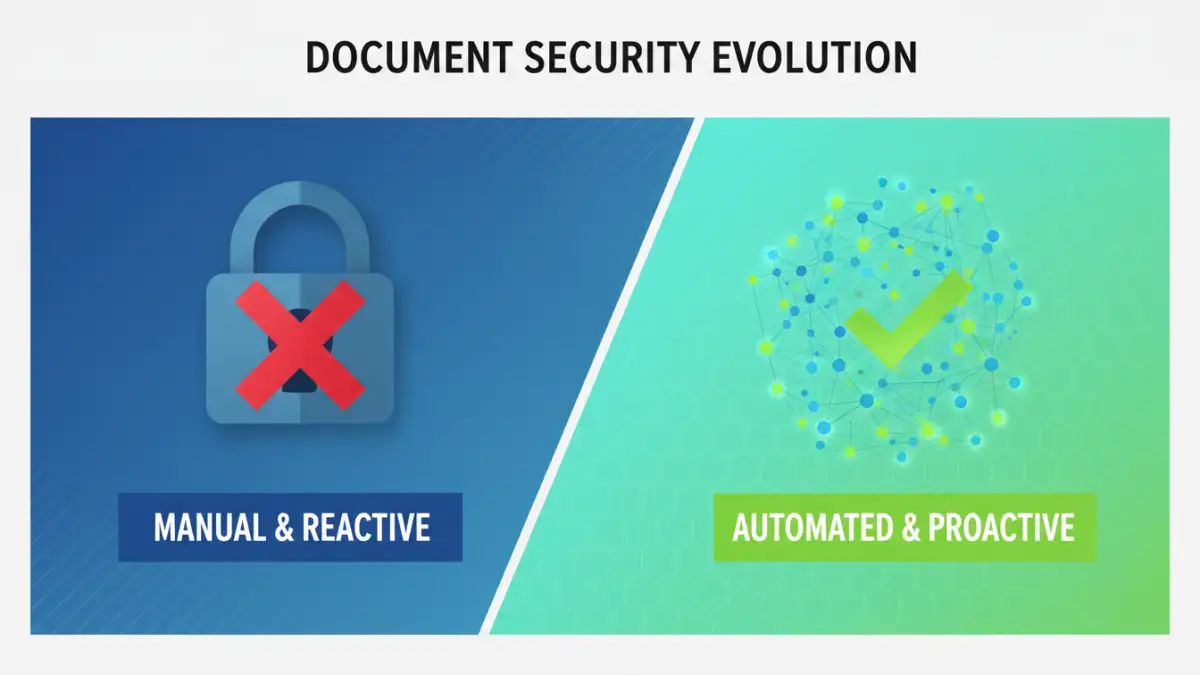
At its core, ai document security leverages machine learning algorithms and advanced analytics to fortify digital files. Unlike static security protocols, AI systems can learn from vast datasets, identify anomalies, and detect potential breaches before they occur. This adaptive nature is crucial in combating evolving cyber threats.
Think of it as having a vigilant digital guardian for every file. This guardian doesn't just follow rules; it learns, predicts, and acts autonomously to ensure document safety innovation.
The Role of Machine Learning
Machine learning is the engine behind AI-powered document security. Algorithms are trained to recognize normal data access patterns and flag deviations that might indicate unauthorized activity. This includes unusual login attempts, abnormal file access times, or suspicious data transfer volumes.
This continuous learning process means the security system becomes more robust and accurate over time, offering increasingly sophisticated protection.
Key Capabilities of AI-Powered Security

AI brings several powerful capabilities to the table, significantly enhancing smart file protection.
Threat Detection and Prevention
AI excels at identifying zero-day threats and sophisticated malware that traditional signature-based antivirus software might miss. By analyzing behavioral patterns, AI can detect malicious activities in their early stages, preventing data exfiltration or corruption.
Automated Data Classification and Tagging
One of the time-consuming aspects of security is classifying sensitive data. AI can automate this process, identifying and tagging confidential information within documents, allowing for the application of appropriate security policies. This ensures that sensitive content receives the highest level of protection automatically.
Behavioral Analysis
AI monitors user and system behavior to establish a baseline of normal activity. Any significant deviation from this baseline, such as a user accessing files they don't normally interact with, can trigger an alert or an automated security response. This proactive approach is vital for preventing insider threats and compromised accounts.
Adaptive Encryption
While encryption is a cornerstone of document security, AI can enhance it further. AI can dynamically adjust encryption levels based on the sensitivity of the data and the perceived risk, ensuring that the strongest possible protection is always applied without hindering legitimate access.
Implementation Strategies
Integrating AI into document security requires a strategic approach, often building upon existing infrastructure.
Cloud-Based Solutions
Many AI-powered security solutions are offered as cloud services. These platforms can integrate with existing cloud storage and collaboration tools, providing seamless protection without extensive on-premises hardware. This makes advanced security accessible and scalable.
Endpoint Security Enhancements
AI can be deployed on individual devices (endpoints) to monitor file activity and detect threats locally. This layered approach ensures that security is present wherever documents are accessed or stored.
Data Loss Prevention (DLP) Integration
AI significantly boosts the effectiveness of DLP systems. By intelligently identifying and classifying sensitive data, AI ensures that DLP policies are applied accurately and consistently, preventing accidental or malicious data leaks.
Benefits and Challenges
The advantages of AI in document security are substantial, but challenges remain.
Key Benefits
- Enhanced threat detection and faster response times.
- Reduced risk of data breaches and compliance violations.
- Automation of security tasks, freeing up IT resources.
- Improved accuracy in identifying sensitive data.
- Continuous learning and adaptation to new threats.
Challenges
- High implementation costs for some advanced solutions.
- Need for skilled personnel to manage and interpret AI systems.
- Potential for false positives or negatives if AI models are not properly trained.
- Ensuring data privacy during the AI training process.
- Integration complexities with legacy systems.
Future Outlook
The role of artificial intelligence in securing documents is set to expand dramatically. We can anticipate more sophisticated predictive analytics, AI-driven automated incident response, and even AI-powered encryption techniques that are more resilient to quantum computing threats.
The trend towards autonomous security systems will continue, making document safety innovation a dynamic and ever-improving field. As AI technology matures, it will become an indispensable component of any comprehensive digital security strategy.
Comparison Table: AI Document Security vs. Traditional Methods
| Feature | Traditional Methods (e.g., Passwords, Basic Encryption) | AI-Powered Document Security |
|---|---|---|
| Threat Detection | Reactive, signature-based, easily bypassed by new threats | Proactive, behavioral analysis, detects zero-day threats |
| Adaptability | Static, requires manual updates | Dynamic, learns and adapts to evolving threats |
| Data Classification | Manual, prone to human error | Automated, intelligent, consistent |
| Response Time | Slow, often requires human intervention | Fast, automated, real-time actions |
| Complexity | Relatively simple to implement and use | Can be complex, requires specialized expertise |
| Cost | Generally lower initial cost | Higher initial investment, but potentially lower long-term risk |
| Effectiveness | Limited against sophisticated attacks | Significantly higher against advanced threats |