
When we build systems that handle sensitive documents, the way we document their security features is just as critical as the security itself. Poorly documented APIs can lead to misconfigurations, vulnerabilities, and ultimately, data breaches. My experience has shown that a clear, structured approach to API documentation is paramount for developers to implement security controls effectively and confidently.
This isn't just about listing endpoints; it's about providing context, explaining security implications, and offering practical guidance. Without this, even the most robust security measures can be undermined by simple misunderstandings.
Table of Contents
Understanding the Importance
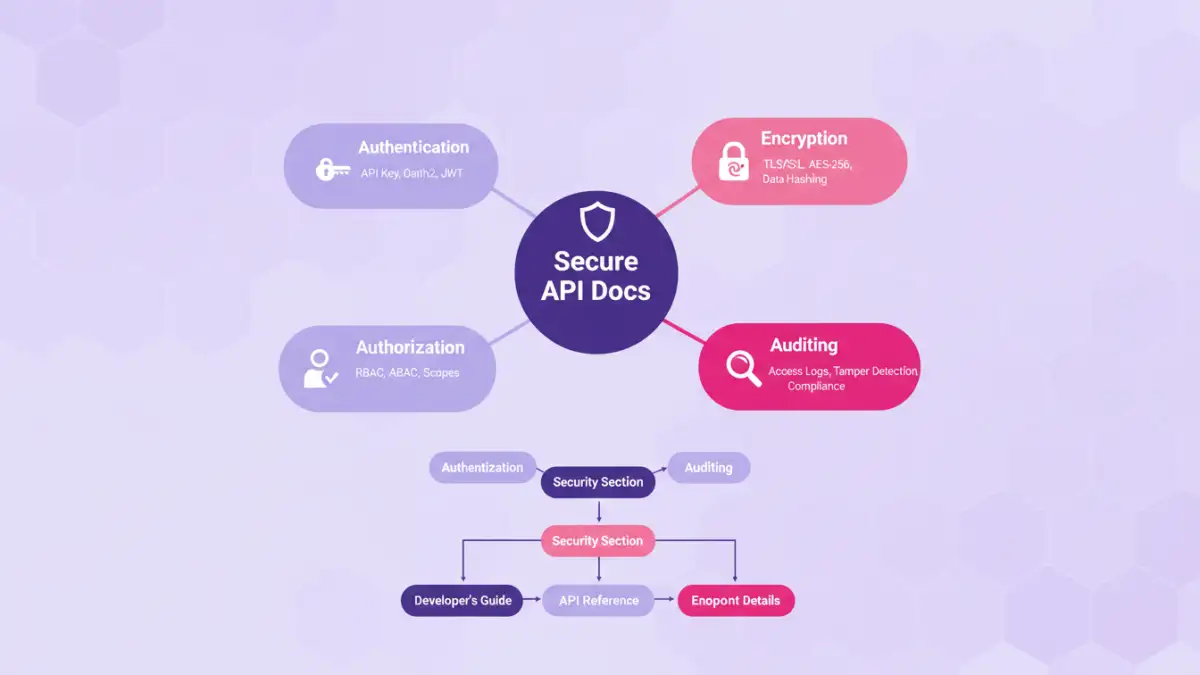
The primary goal of any API documentation is to enable developers to integrate with your service efficiently and correctly. When dealing with document security, this goal is amplified. Developers need to understand not only how to access and manipulate documents but also how to secure them, manage permissions, and handle sensitive data responsibly.
Failing to provide clear instructions on security aspects can lead to unintended exposure of sensitive information. This can result in compliance violations, loss of trust, and significant financial or reputational damage. Therefore, comprehensive document security API documentation is not an option; it's a necessity.
Why It Matters
Think about it: if an API allows file uploads, the documentation must detail the acceptable file types, size limits, and crucially, how malware scanning or content validation is performed. If it handles encryption, it must explain the algorithms used, key management, and how to properly encrypt and decrypt data. Developers rely on this information to build secure applications.
Core Elements of Secure API Docs

To effectively structure your API documentation for security, certain key elements must be present and clearly articulated. These form the foundation for secure integration and usage.
Authentication and Authorization
This is foundational. Your documentation must clearly outline the authentication methods supported (e.g., API keys, OAuth 2.0, JWTs) and how to obtain and use credentials. Equally important is detailing the authorization mechanisms – what permissions are required for specific operations, and how roles or access control lists (ACLs) are managed.
For instance, when documenting an endpoint that allows document deletion, it's crucial to specify that only users with 'admin' privileges or the document owner can perform this action. Without this clarity, developers might assume broader access.
Data Handling and Encryption
How is data transmitted? Is TLS/SSL enforced? What encryption standards are used for data at rest? These questions need direct answers in your documentation. If your API handles sensitive document content, explaining the encryption lifecycle – from transmission to storage and retrieval – is vital.
This includes details on supported encryption algorithms, key rotation policies, and how developers can interact with these features. For example, if your API supports end-to-end encryption, the documentation should provide SDKs or code examples demonstrating how to manage encryption keys and perform encryption/decryption operations.
Audit Logging and Monitoring
For many regulated industries, audit trails are non-negotiable. Your API documentation should explain what events are logged (e.g., document access, modification, deletion), the format of these logs, and how developers or administrators can access or integrate with them. This transparency is key for security monitoring and incident response.
Clearly defining what actions are auditable helps developers understand the security posture and build systems that comply with internal policies or external regulations. It also aids in troubleshooting and forensic analysis.
Structuring Your Documentation
A logical organization is key to making security information accessible and understandable. I've found a layered approach works best, starting broad and then diving into specifics.
Introduction and Overview
Begin with a high-level overview of the API's security model. What are the overarching principles? What kind of data does it protect? This sets the stage and informs developers about the security context from the outset.
Dedicated Security Section
It's beneficial to have a dedicated section for security. This section can cover:
- Authentication and Authorization details
- Data Encryption and Protection mechanisms
- Secure Coding Practices recommendations
- API Rate Limiting and Throttling
- Vulnerability Disclosure Policy
- Compliance information (e.g., GDPR, HIPAA if applicable)
This centralizes critical security information, making it easy for developers to find what they need without sifting through endpoint descriptions.
Endpoint-Specific Security
Within the documentation for each API endpoint, clearly label security requirements. This includes:
- Required authentication scopes/permissions
- Data validation rules
- Any security considerations specific to that operation (e.g., potential for denial-of-service if not used correctly)
For example, an endpoint that allows downloading a sensitive report should explicitly state the 'read:report' scope required and mention that the downloaded file should be handled with care.
Best Practices for Clarity
Beyond just including security information, how you present it matters immensely. Clarity and conciseness are paramount.
Use Clear, Unambiguous Language
Avoid jargon where possible. When technical terms are necessary, define them. Ensure that the language used is precise and leaves no room for misinterpretation regarding security protocols or requirements.
Provide Code Examples
Abstract explanations are helpful, but concrete examples are better. Show developers how to implement security measures using your API. Include examples for authentication, encryption, and secure data handling in popular programming languages.
My team often spends extra time crafting robust, runnable code examples for security-related operations. This significantly reduces integration time and the likelihood of errors. A well-documented example for securely uploading a file, including headers and payload structure, is invaluable.
Regular Updates
The threat landscape evolves, and so should your API and its documentation. Ensure that security documentation is reviewed and updated regularly, especially when new security features are added, existing ones are modified, or potential vulnerabilities are discovered and patched.
Real-World Example
Consider an API for a cloud document storage service. The organize API docs for such a service would need sections detailing:
- Authentication: OAuth 2.0 flow for user login and API key generation for server-to-server access.
- File Upload: Endpoint details, required permissions (e.g., `write:files`), maximum file size, and explicit mention of TLS encryption during transit.
- File Download: Endpoint details, required permissions (e.g., `read:files`), and information about any server-side encryption at rest.
- Access Control: How to set read/write permissions for shared documents, including user roles and public/private sharing options.
- Document Deletion: Endpoint details, required permissions (`delete:files`), and information about data retention or recovery policies.
This structured approach ensures developers understand the security implications of every operation they perform.
Comparison Table
| Documentation Aspect | Importance Level | Potential Impact of Poor Documentation | Key Information to Include |
|---|---|---|---|
| Authentication/Authorization | Critical | Unauthorized access, data breaches, compliance failures | Methods, credential management, permission scopes, role definitions |
| Data Handling & Encryption | High | Data exposure, loss of confidentiality, interception of sensitive information | Transmission security (TLS), at-rest encryption, algorithms, key management |
| Audit Logging | Medium to High (depends on regulation) | Inability to track actions, difficulty in incident response, compliance violations | Loggable events, log format, access methods, retention policies |
| Rate Limiting & Throttling | Medium | Denial of Service (DoS) attacks, system instability, unfair resource usage | Limits per user/IP, reset intervals, error codes |
| Secure Coding Practices | Medium | Developer-introduced vulnerabilities, insecure integration patterns | Recommendations, common pitfalls, best practices for input validation |