The General Data Protection Regulation (GDPR) has fundamentally altered how organizations approach the handling and protection of personal data. Beyond just online forms and databases, this regulation places significant emphasis on the security of all documents, whether digital or physical, that contain personal information. For any business that processes data of EU residents, understanding and implementing robust document security measures is no longer optional; it's a legal imperative.
My experience, particularly when working with clients in regulated industries, has shown that the GDPR's reach extends to every nook and cranny of an organization's data lifecycle. This means ensuring that sensitive documents are not only protected from external breaches but also from internal misuse and accidental disclosure.
Table of Contents
Understanding GDPR's Mandates on Document Security
At its core, GDPR Article 32, "Security of Processing," requires data controllers and processors to implement appropriate technical and organizational measures to ensure a level of security appropriate to the risk. This directly translates to how documents containing personal data are managed. It's not just about preventing a data breach; it's about demonstrating a proactive stance on data protection throughout the document's existence.
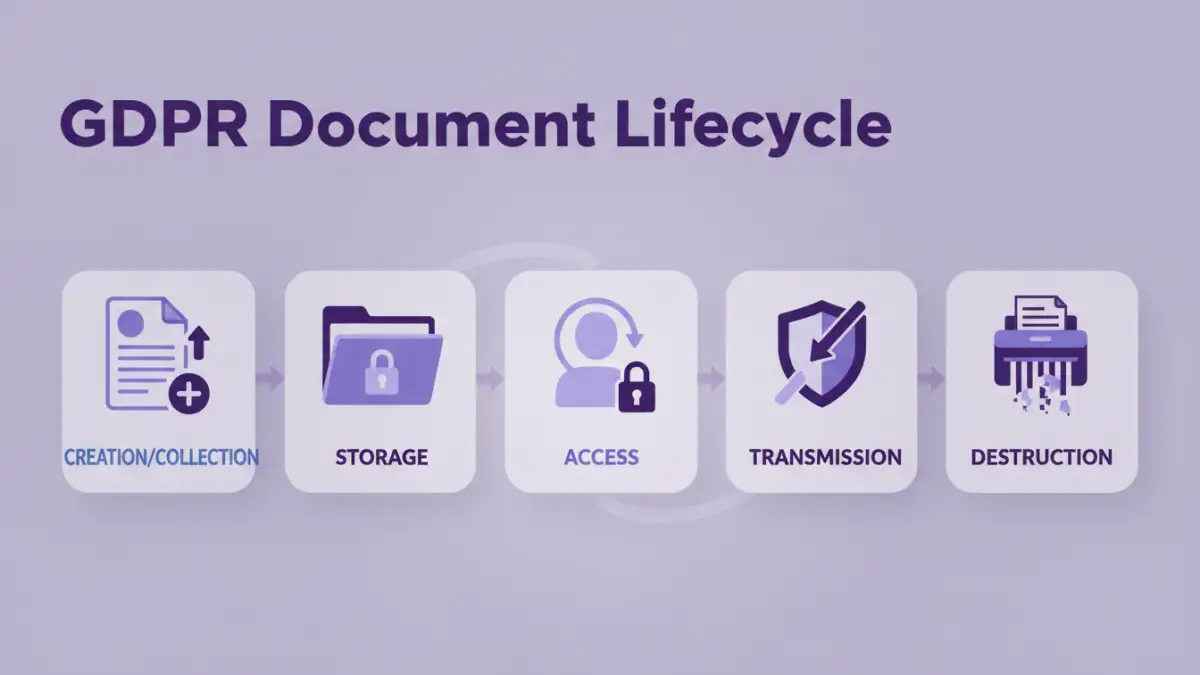
This includes safeguarding against unauthorized access, alteration, disclosure, or destruction of personal data. For documents, this means securing them from the moment they are created or received until their secure disposal.
Data Minimization and Storage Limitation
GDPR promotes the principles of data minimization and storage limitation. This means organizations should only collect personal data they absolutely need and retain it only for as long as necessary. Applied to documents, this principle encourages reducing the number of sensitive documents created or stored and establishing clear retention policies. Regularly reviewing and securely destroying documents that are no longer required is a critical part of GDPR compliance.
Key Principles Impacting Document Handling

Several GDPR principles directly influence how documents must be secured. The principle of accountability, for instance, requires organizations to not only comply with GDPR but also to be able to demonstrate compliance. This means having clear policies, procedures, and audit trails for document handling.
Furthermore, the principle of integrity and confidentiality is paramount. This ensures that personal data within documents is protected against unauthorized or unlawful processing and against accidental loss, destruction, or damage. Implementing strong access controls and encryption are key technical measures to uphold this principle.
Technical and Organizational Measures
GDPR doesn't prescribe specific technologies but mandates that the measures chosen are appropriate to the risk. For document security, this often involves a combination of technical and organizational strategies. Technical measures can include encryption of documents at rest and in transit, secure file-sharing platforms, and robust access control systems that enforce the principle of least privilege.
Organizational measures are equally vital. These encompass training employees on data protection policies, establishing clear procedures for document creation, storage, access, and destruction, and conducting regular risk assessments. I've seen firsthand how comprehensive employee training can prevent accidental data leaks that technology alone cannot stop.
Access Controls and Encryption
Implementing granular access controls is fundamental. Who needs to see what document, and under what circumstances? Role-based access ensures that only authorized personnel can access specific files. Encryption takes this a step further by making the data unreadable to anyone without the decryption key, even if they gain unauthorized physical or digital access to the file itself. For sensitive documents, end-to-end encryption provides the highest level of assurance.
Practical Implementation for Secure Document Handling
Adopting a layered approach is often the most effective. This starts with identifying all documents containing personal data and classifying them based on sensitivity. Then, appropriate security measures can be applied. For instance, highly sensitive documents might require strong encryption and strict access controls, while less sensitive documents might only need basic password protection and secure storage.
Regular audits of document access logs and security configurations are also crucial to identify any potential vulnerabilities or policy violations. My work often involves setting up these audit systems to provide peace of mind and a clear record in case of an inquiry.
Secure Document Disposal
The lifecycle of a document doesn't end when it's no longer needed. Secure disposal is a critical GDPR requirement. For physical documents, this means shredding or incineration. For digital documents, it involves securely deleting files using data wiping techniques or degaussing storage media to ensure the data is irrecoverable.
Consequences of Non-Compliance
The penalties for GDPR non-compliance can be severe, including hefty fines of up to €20 million or 4% of global annual turnover, whichever is higher. Beyond financial penalties, reputational damage can be devastating, leading to loss of customer trust and business. Demonstrating robust document security practices is a key component of overall GDPR compliance and helps mitigate these risks.
GDPR Document Security Comparison
| Measure | Description | Effectiveness Against Risk | Implementation Effort |
|---|---|---|---|
| Password Protection (Basic) | Applying a password to open a document. | Low to Medium (depends on password strength). Vulnerable to brute-force attacks. | Low |
| File Encryption (e.g., AES-256) | Using strong encryption algorithms to scramble document data. | High. Protects data even if file is accessed without authorization. | Medium (often built into OS or software) |
| Access Control Lists (ACLs) | Defining permissions for users/groups to access files. | High for authorized access. Prevents unauthorized internal viewing. | Medium to High (requires system configuration) |
| Secure Document Management Systems (DMS) | Centralized systems with version control, audit trails, encryption, and access management. | Very High. Comprehensive security and compliance features. | High (requires dedicated software and setup) |
| Physical Shredding/Wiping | Securely destroying physical or digital documents. | High for data at rest and end-of-life. Prevents recovery. | Low to Medium |