
In my ten years navigating complex IT infrastructures, I've seen firsthand how challenging it can be for organizations to keep their digital house in order, especially when operations span multiple countries. The seemingly straightforward task of storing old records transforms into a legal minefield the moment you cross a border. Ensuring your digital records are not just safe but also legally compliant across diverse jurisdictions is a monumental undertaking, yet absolutely critical for avoiding hefty fines and reputational damage.
Table of Contents
Understanding the Global Landscape of Digital Archiving
The digital age has blurred geographical lines, but legal boundaries remain firmly in place. What might be acceptable for document retention in one country could lead to severe penalties in another. This complexity is amplified when data is generated in one region, processed in another, and archived in a third. Organizations must grapple with a patchwork of regulations that often conflict or overlap, requiring a nuanced approach to global data governance.
Data Sovereignty and Residency
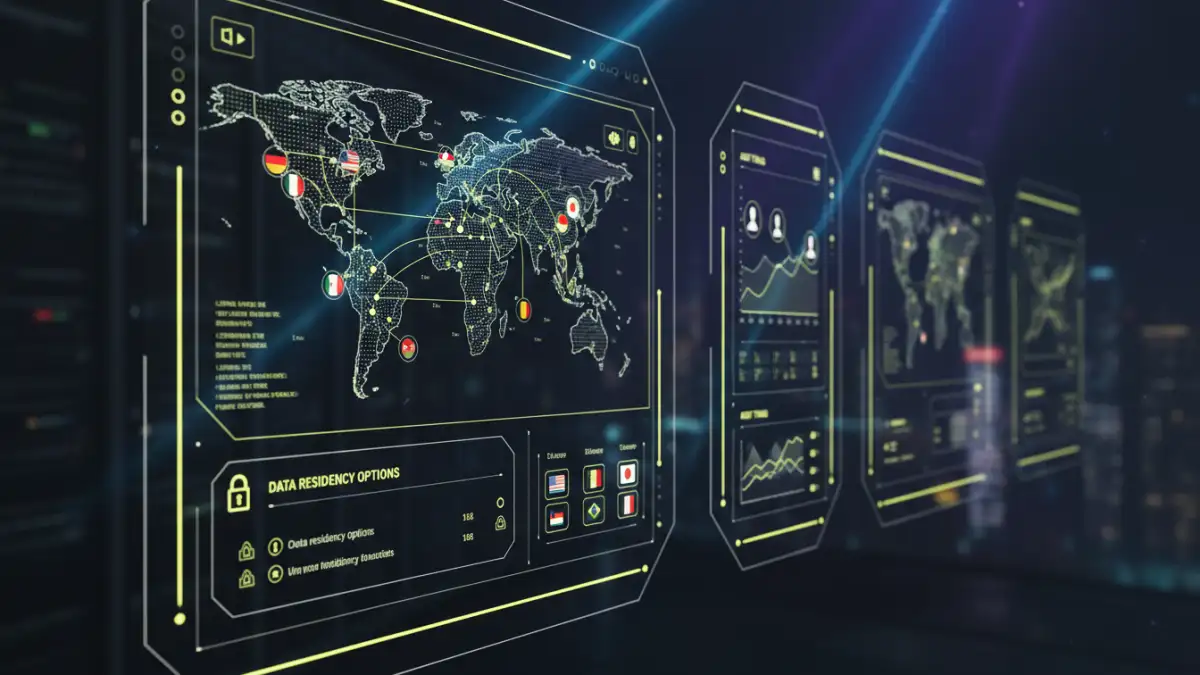
A core concept in international data law is data sovereignty, which dictates that data is subject to the laws of the country in which it is stored. This often intertwines with data residency requirements, mandating that certain types of data must physically reside within specific national borders. For instance, some financial or health records may be legally required to stay within the EU, even if the company's headquarters are in the US. This presents a significant challenge for cloud-based secure document archiving solutions that might replicate data across multiple regions for redundancy and performance.
Navigating Key International Legal Frameworks
To effectively manage digital archives, it’s crucial to understand the major legal frameworks shaping international data practices. Each framework introduces its own set of rules regarding data collection, storage, retention, and deletion. Misinterpreting or ignoring these can have severe legal and financial repercussions, making due diligence paramount.
GDPR's Broad Reach
The General Data Protection Regulation (GDPR) in the European Union is perhaps the most well-known and influential of these frameworks. It applies not just to organizations within the EU, but also to any entity worldwide that processes the personal data of EU citizens. GDPR mandates strict rules on data retention periods, requiring data to be deleted once its purpose is fulfilled, and outlines specific rights for data subjects, including the 'right to be forgotten'. For secure document archiving, this means meticulous tracking of data purpose and retention schedules.
Sector-Specific Regulations and Local Nuances
Beyond broad privacy laws, many industries are subject to their own specific regulations. For example, HIPAA (Health Insurance Portability and Accountability Act) governs healthcare data in the US, while various financial regulations like SOX (Sarbanes-Oxley Act) or Basel Accords dictate how financial records must be kept. Additionally, individual countries often have unique local laws, such as Brazil's LGPD or California's CCPA, which add further layers of complexity. A truly global compliance solution needs to account for this intricate web of rules, ensuring that digital record keeping is robust and adaptable.
Crafting a Compliant Secure Document Archiving Strategy
Developing an effective strategy for secure document archiving across international borders requires a blend of policy, technology, and continuous vigilance. It's not a one-time setup but an ongoing commitment to adapt to evolving legal landscapes and business needs. My experience has shown that a proactive, layered approach is always best.
Data Classification and Retention Policies
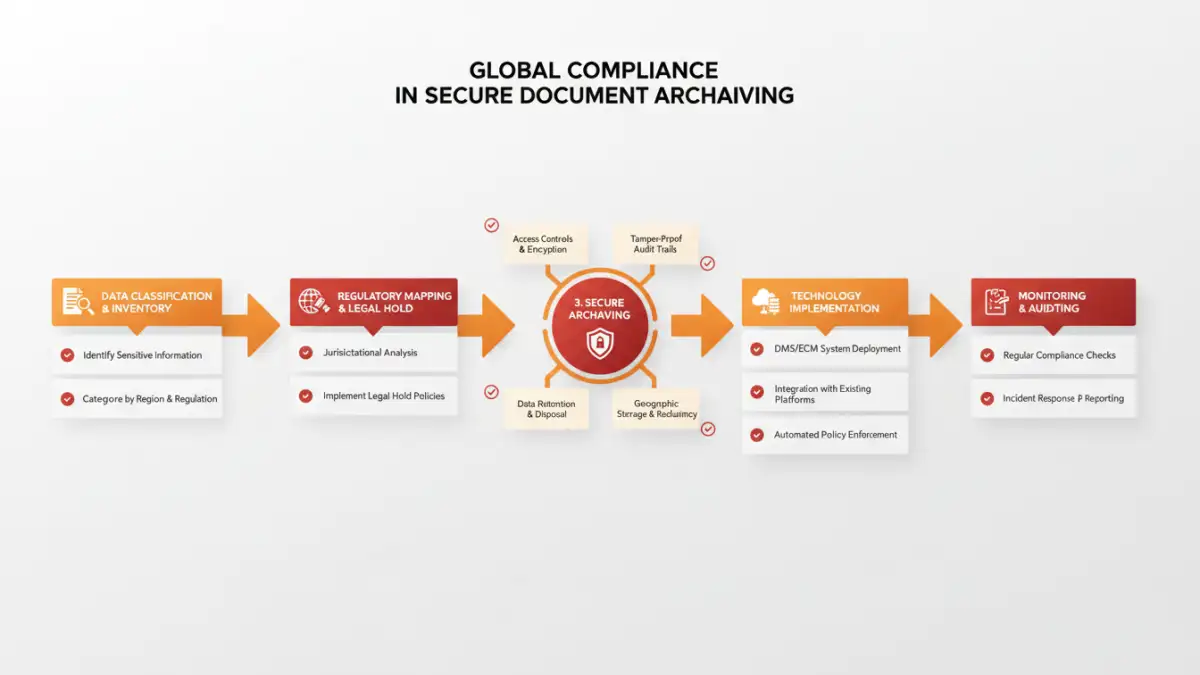
The cornerstone of any compliant archiving strategy is a robust data classification system. Not all data is created equal; some is highly sensitive and subject to strict regulations, while other data might have minimal legal impact. Classifying data by sensitivity, legal requirements, and business value allows organizations to apply appropriate retention policies. These policies must clearly define how long different types of data are kept, where they are stored, and when they are securely disposed of, adhering to the most stringent applicable international archiving laws.
Leveraging Technology for Global Compliance
Modern technology plays a critical role in automating and enforcing compliance. Enterprise Content Management (ECM) systems, Records Management (RM) solutions, and e-discovery platforms can help manage the lifecycle of digital records. Features like automated retention scheduling, immutable storage, audit trails, and granular access controls are essential for demonstrating compliance and protecting sensitive information. Cloud providers offering data residency options or 'sovereign cloud' solutions can also be invaluable for addressing specific geographic storage requirements, aiding in secure document archiving.
Overcoming Cross-Border Challenges and Future Outlook
The landscape of international data law is constantly shifting, presenting ongoing challenges for organizations. Cross-border data transfers, the rise of new technologies like AI, and evolving geopolitical dynamics all impact how we approach digital record keeping. Staying informed and agile is key to maintaining compliance.
One of the biggest hurdles remains the legal basis for transferring data across borders, especially between regions with different privacy standards. Mechanisms like Standard Contractual Clauses (SCCs) or Binding Corporate Rules (BCRs) are often used, but their validity can be challenged, as seen with the Schrems II ruling. Furthermore, the advent of AI and machine learning introduces new complexities, as these technologies often require processing vast amounts of data, raising questions about consent, data lineage, and automated decision-making. Organizations must continuously monitor these developments and adapt their secure document archiving practices accordingly, ensuring their global compliance solutions remain robust.
International Document Archiving Law Comparison
| Regulation | Jurisdiction | Key Focus | Data Retention Principle | Extraterritoriality |
|---|---|---|---|---|
| GDPR | EU/EEA | Personal Data Protection | Data Minimization, Purpose Limitation | Yes (applies to processing EU data subjects' data) |
| HIPAA | United States | Protected Health Information (PHI) | Required for minimum periods (e.g., 6 years for some records) | Limited (primarily US entities) |
| CCPA/CPRA | California, USA | Consumer Personal Information | Reasonably necessary for purpose | Yes (applies to businesses serving CA residents) |
| PIPEDA | Canada | Personal Information in Private Sector | As long as reasonably required for purpose | Yes (applies to organizations collecting Canadian data) |
| LGPD | Brazil | Personal Data Protection | Necessary for purpose, limited period | Yes (applies to processing Brazilian data) |