Working with password-protected documents can be frustrating when you've forgotten the password, but it's a testament to how common this security measure has become. In an era where digital information is constantly being shared and stored, securing sensitive files is no longer a niche concern but a widespread practice. Understanding how often files are protected gives us insight into the general awareness and adoption of basic cybersecurity measures.
From personal documents to corporate reports, the need to control access to information has driven the adoption of various protection methods. This includes not just complex encryption but also the relatively simple act of applying a password. The question then becomes: just how prevalent is this practice across different types of files and industries?
Table of Contents
Understanding the Prevalence
In my work over the years, I've noticed a significant increase in the use of password protection for digital files. It's become a standard expectation for sharing sensitive information, whether it's a financial report, a legal contract, or even personal tax documents. This shift is driven by both user convenience and the growing awareness of digital threats.
While precise global statistics are hard to pin down due to varying reporting standards and the private nature of many protected files, anecdotal evidence and industry surveys suggest a high and growing adoption rate. Many users opt for password protection as a first line of defense, a simple yet effective barrier against casual unauthorized access.
Why Files Are Protected

The primary motivation behind applying a password to a file is to restrict access to authorized individuals. This is crucial for maintaining confidentiality, ensuring data integrity, and complying with privacy regulations like GDPR or HIPAA. Unauthorized access to sensitive data can lead to identity theft, financial loss, or reputational damage.
Beyond just confidentiality, password protection can also serve as a deterrent. Knowing that a file requires a password makes it less likely for someone to casually open and potentially misuse its contents. It adds a layer of intentionality to accessing information, reinforcing its sensitive nature.
Document Protection Statistics
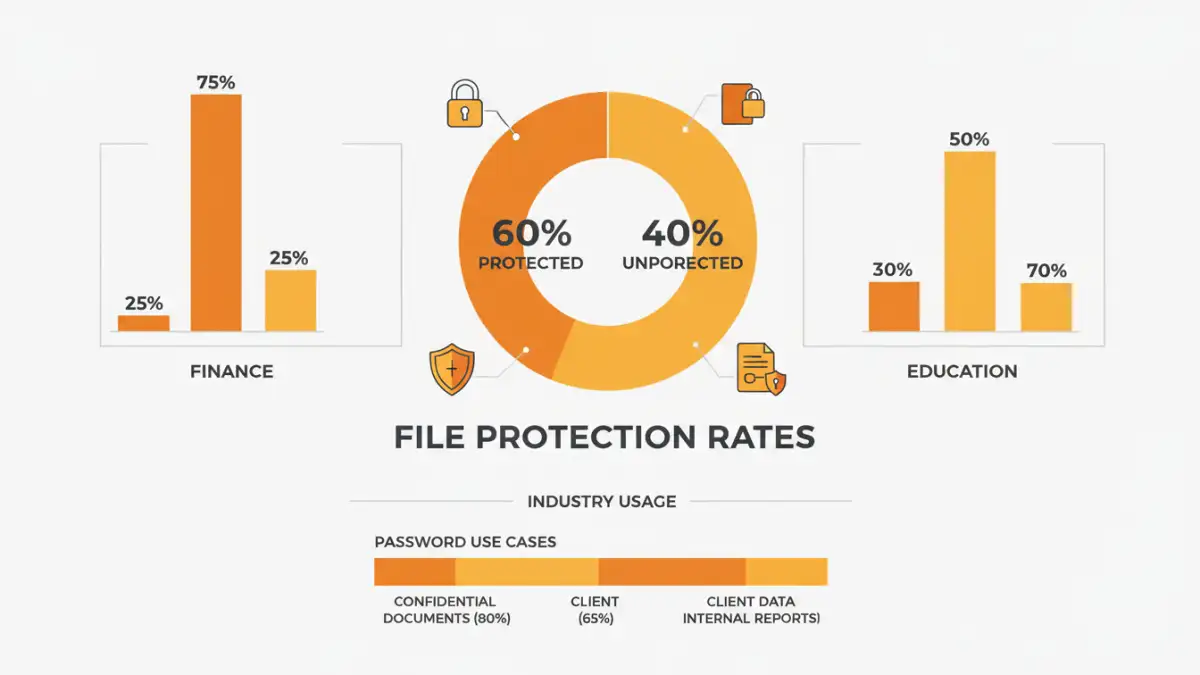
While comprehensive, real-time global figures on file password usage are elusive, various reports and surveys offer insights. For instance, studies focusing on business practices often highlight that a substantial percentage of organizations employ password protection for sensitive documents. This figure can range from 50% to over 80% depending on the industry and the sensitivity of the data handled.
The adoption of password protection is particularly high in sectors like finance, healthcare, and legal services, where data privacy is paramount. Even in less regulated sectors, the trend is upward as individuals and businesses become more aware of the risks associated with data breaches. The prevalence of pdf password security as a topic in online searches also indicates a strong user interest and a high frequency of its application.
Factors Influencing Usage
Several factors contribute to the frequency of file protection. The perceived sensitivity of the information is a major driver. Documents containing personal identifiable information (PII), financial data, intellectual property, or confidential business strategies are far more likely to be password protected.
Technological accessibility also plays a role. Most modern operating systems and applications, including Microsoft Office Suite, Adobe Acrobat, and even basic file archiving tools like ZIP, offer built-in password protection features. This ease of use makes it a readily available option for many users.
Types of Protected Files
The most commonly protected file types often include documents that contain critical information. PDFs are frequently secured because they are widely used for sharing finalized documents, and applying a password ensures that the content remains as intended. Microsoft Office documents (Word, Excel, PowerPoint) are also prime candidates for password protection, especially in business environments.
Other file types that may be password protected include archives (like .zip or .rar files) that bundle multiple sensitive documents, images containing private information, and proprietary data files used by specific software. The method of protection can vary, from simple document passwords to more robust full-disk encryption, but the underlying goal remains the same: to control access.
Best Practices for Protection
When implementing password protection, it's essential to use strong, unique passwords. Avoid using easily guessable information like birthdays or common words. For critical documents, consider using a password manager to generate and store complex passwords securely. This not only enhances security but also helps manage multiple passwords effectively.
Regularly review and update passwords for sensitive files, especially if the information's sensitivity level changes or if there's a suspected security compromise. Understanding the different levels of protection offered by various tools – from basic document passwords to advanced encryption – can help you choose the most appropriate method for your needs.
Comparison Table: File Protection Methods
| Method | Ease of Use | Security Level | Common Use Cases | Example Tools |
|---|---|---|---|---|
| Basic Document Password | Very Easy | Low to Medium | Securing single documents (e.g., Word, PDF) from casual access | Microsoft Word, Adobe Acrobat |
| Archive File Password (.zip/.rar) | Easy | Low to Medium | Bundling and protecting multiple files for transfer | WinRAR, 7-Zip, built-in OS tools |
| Online File Protection Tools | Easy | Medium (depends on provider) | Quick, on-the-go protection without software installation | Various online PDF/file lockers |
| Desktop Encryption Software | Medium | High | Comprehensive protection for sensitive data, bulk encryption | VeraCrypt, BitLocker (Windows), FileVault (macOS) |