
Working with sensitive information often involves sharing documents across borders. Whether you're a multinational corporation, a legal firm, or a freelancer collaborating with international clients, ensuring the security of your PDF files during transit is paramount. This isn't just about encryption; it's also about adhering to a complex web of international data transfer laws that govern how personal and confidential data can move between countries.
My experience has shown that many organizations focus heavily on technical security measures like password protection and encryption for their PDFs, which is crucial. However, they sometimes overlook the legal and regulatory landscape that dictates where and how this data can be stored and transferred. Failing to comply with these regulations can lead to significant fines, reputational damage, and loss of trust.
Table of Contents
Understanding International Data Transfer Laws
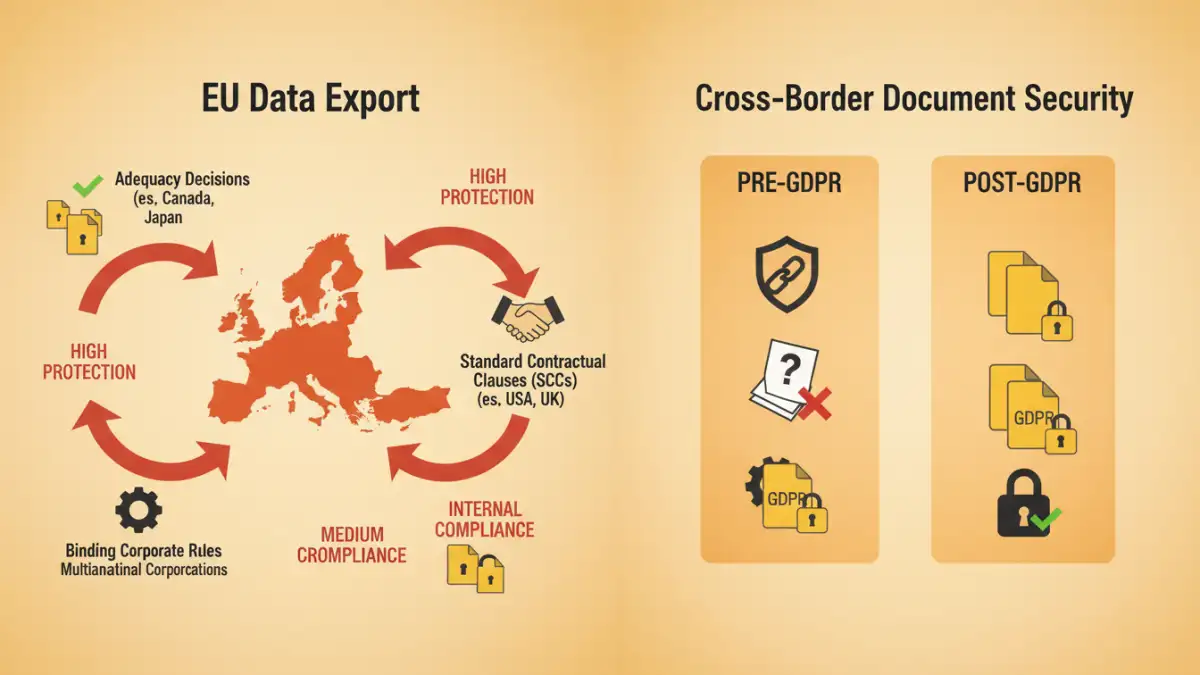
International data transfer laws are essentially a set of rules and regulations enacted by different countries or regions to control the movement of personal and sensitive data outside their own borders. These laws are designed to protect the privacy rights of individuals and ensure that data remains secure, even when it crosses national boundaries.
The core principle behind many of these laws is that data protection standards should be maintained regardless of where the data is processed or stored. This means that if you are transferring data from a country with strong privacy laws to one with weaker protections, you must still ensure the data is handled with a comparable level of security. This often involves implementing specific contractual clauses, obtaining consent, or adhering to approved transfer mechanisms.
The Challenge of Cross-Border Data Flow
In today's interconnected world, data flows constantly between different jurisdictions. For businesses that rely on cloud services, distributed teams, or international clients, managing these cross-border data flows can be a significant challenge. Ensuring that every transfer complies with the relevant laws requires a thorough understanding of where your data resides at any given moment and the legal status of each jurisdiction involved.
The GDPR and Its Global Reach
The General Data Protection Regulation (GDPR) is perhaps the most influential piece of data privacy legislation globally. While it's an EU regulation, its impact is far-reaching, affecting any organization worldwide that processes the personal data of EU residents. The GDPR places strict requirements on international data transfers, particularly when moving data outside the European Economic Area (EEA).
Under the GDPR, transfers of personal data outside the EEA are only permitted if the receiving country is deemed to have an adequate level of data protection, or if appropriate safeguards are in place. These safeguards can include Standard Contractual Clauses (SCCs) approved by the European Commission, Binding Corporate Rules (BCRs) for intra-group transfers, or specific certifications. For PDFs containing personal data, this means ensuring that the method of transfer and the destination comply with these stringent requirements.
Implications for PDF Security
When you're dealing with sensitive information within a PDF that falls under GDPR, such as client contracts, employee records, or customer details, simply encrypting the file isn't enough if it's transferred to a country without an adequacy decision. You must also ensure the transfer mechanism itself is lawful. This might involve adding specific clauses to your contracts with third-party service providers or ensuring your internal processes for sharing these PDFs internationally meet the GDPR's transfer requirements.
Other Key Regulations to Consider
While the GDPR is prominent, it's not the only regulation impacting international data transfers. Many other countries and regions have enacted their own data protection laws, often inspired by or complementary to the GDPR. Examples include the California Consumer Privacy Act (CCPA) in the United States, Brazil's Lei Geral de Proteção de Dados (LGPD), and Canada's Personal Information Protection and Electronic Documents Act (PIPEDA).
Each of these regulations may have specific stipulations regarding cross-border data transfers. Some might require explicit consent, others might focus on data localization requirements (keeping data within the country), and still others might have specific rules for certain types of sensitive data. Navigating this landscape requires diligence and often legal counsel to ensure comprehensive global privacy compliance.
Navigating a Patchwork of Laws
For businesses operating globally, this creates a complex patchwork of legal obligations. A data transfer that is permissible under one country's laws might be restricted by another. Therefore, a robust strategy for pdf security data transfer must consider the legal requirements of all relevant jurisdictions – both the origin and destination of the data.
Secure PDF Sharing Across Borders
Implementing secure PDF sharing across borders involves a combination of technical controls and legal compliance. Beyond standard password protection and encryption, consider methods that offer greater transparency and control over data movement.
When sharing PDFs internationally, prioritize transfer methods that incorporate robust security features and legal safeguards. This could involve using secure file-sharing platforms that offer end-to-end encryption and have data processing agreements in place that adhere to international standards. For instance, using a service that provides data residency options or allows you to specify data processing locations within compliant jurisdictions can be beneficial.
Encryption and Consent
At a technical level, strong encryption is non-negotiable for sensitive PDFs. However, international data laws often require more than just technical security. They may mandate explicit consent from the data subject for their data to be transferred internationally, especially if the destination country's privacy laws are not considered adequate. Clearly communicating why and how data will be transferred, and obtaining informed consent, is a critical part of the compliance process.
Best Practices for Compliance
To effectively manage pdf security data transfer and ensure compliance with international data laws, adopt the following best practices:
Regularly audit your data processing activities to understand where your data is stored and transferred. Maintain an inventory of data flows, especially those involving cross-border transfers. Implement strong contractual clauses with vendors and partners, ensuring they meet your data protection standards.
Invest in employee training to raise awareness about data privacy regulations and secure data handling practices. Stay updated on changes in international data transfer laws, as these are constantly evolving. When in doubt, consult with legal experts specializing in data privacy and international law to ensure your practices are compliant.
Comparison Table: International Data Transfer Mechanisms
| Mechanism | Description | Pros | Cons | When to Use |
|---|---|---|---|---|
| Adequacy Decisions | European Commission deems a country's data protection laws sufficient. | Simplest transfer method for EU data. | Limited to specific countries. | Transferring data to countries with recognized adequate protection. |
| Standard Contractual Clauses (SCCs) | Pre-approved contract templates by the EU Commission. | Widely accepted, provides contractual safeguards. | Requires careful implementation and supplementary measures. | Transferring data outside the EEA when no adequacy decision exists. |
| Binding Corporate Rules (BCRs) | Internal rules for data transfers within a multinational group. | Allows for consistent internal data flow management. | Complex and lengthy approval process by regulators. | Intra-company data transfers for large multinational corporations. |
| Derogations (e.g., Consent) | Specific exceptions for occasional, non-repetitive transfers. | Flexible for one-off situations. | Not suitable for regular or large-scale transfers; requires explicit, informed consent. | Situations where other mechanisms are impractical and consent is obtained. |