
Imagine the sinking feeling when you realize years of cherished memories, carefully scanned and archived as PDFs, are locked away behind a password you can't recall. That's precisely the situation I found myself in recently, a stark reminder about the critical importance of robust photo collection security. My `PDF security story` began when I wanted to revisit some old family photos, only to be met with an impenetrable password prompt.
Table of Contents
The Near Disaster: My Photo Collection at Risk
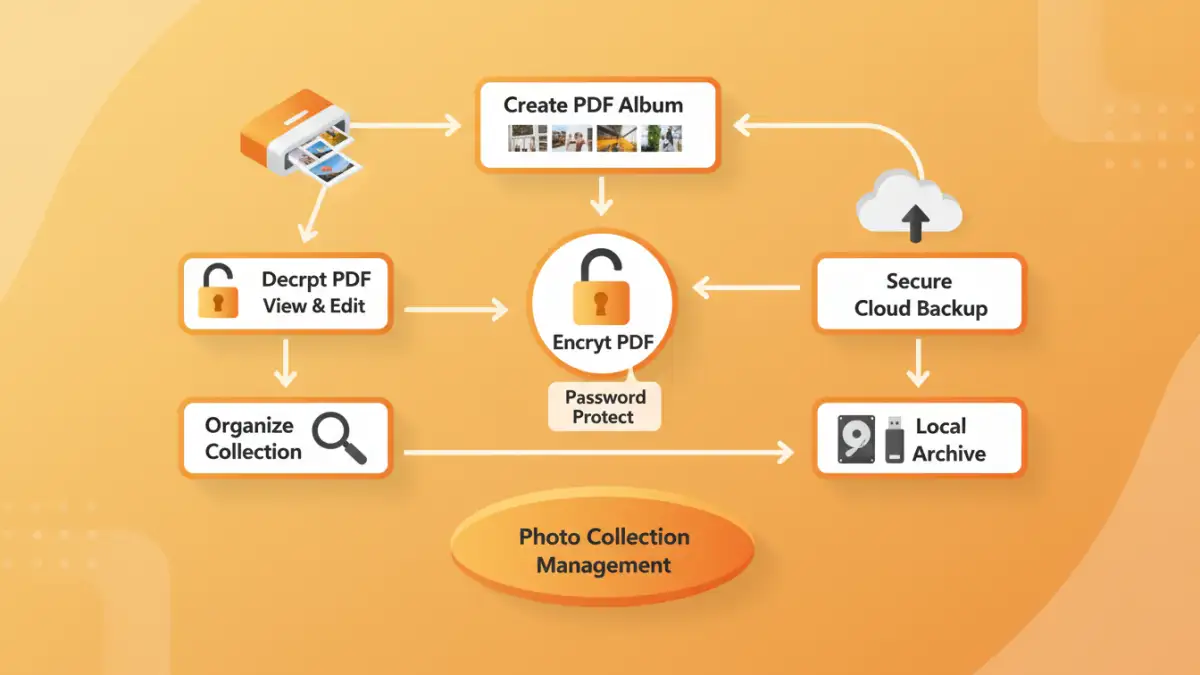
It was a collection spanning decades – old family albums, childhood snapshots, and travel adventures, all meticulously digitized into password-protected PDF documents. The intention was solid: secure these irreplaceable memories. The execution, however, had a critical flaw: I had used a unique, strong password for each PDF, and somewhere along the line, my record-keeping failed. The panic was real; the thought of losing these visual anchors to my past was genuinely distressing.
The Challenge of Forgotten Passwords
Forgetting a password is a common human error, but when it concerns something as invaluable as a personal photo archive, the stakes are incredibly high. This incident highlighted for me, once again, the delicate balance between robust security and practical accessibility. It’s a challenge many of us face, especially when dealing with legacy files encrypted years ago.
Understanding PDF Security Layers
Before diving into recovery, it's crucial to understand how PDF security works. PDFs can have two main types of passwords: a 'user' password (which restricts opening the document) and an 'owner' password (which restricts permissions like printing, editing, or copying content). My files were protected with a user password, meaning I couldn't even view them.
Owner vs. User Passwords
An 'owner' password typically protects the document's functionalities, allowing it to be opened but preventing modifications or extractions. A 'user' password, on the other hand, is a much stronger barrier, preventing anyone without it from opening the document at all. My situation involved the latter, making recovery significantly more challenging without specialized tools or brute-force methods.
Recovering and Protecting Your Digital Photo Safety
My journey to reclaim my photo collection involved exploring several avenues. The first step was to try all plausible password combinations from my mental archive and password manager. When that failed, I looked into more technical solutions. The goal was not just recovery, but also to implement better strategies for future `digital photo safety`.
The Browser Trick: A Simple Solution
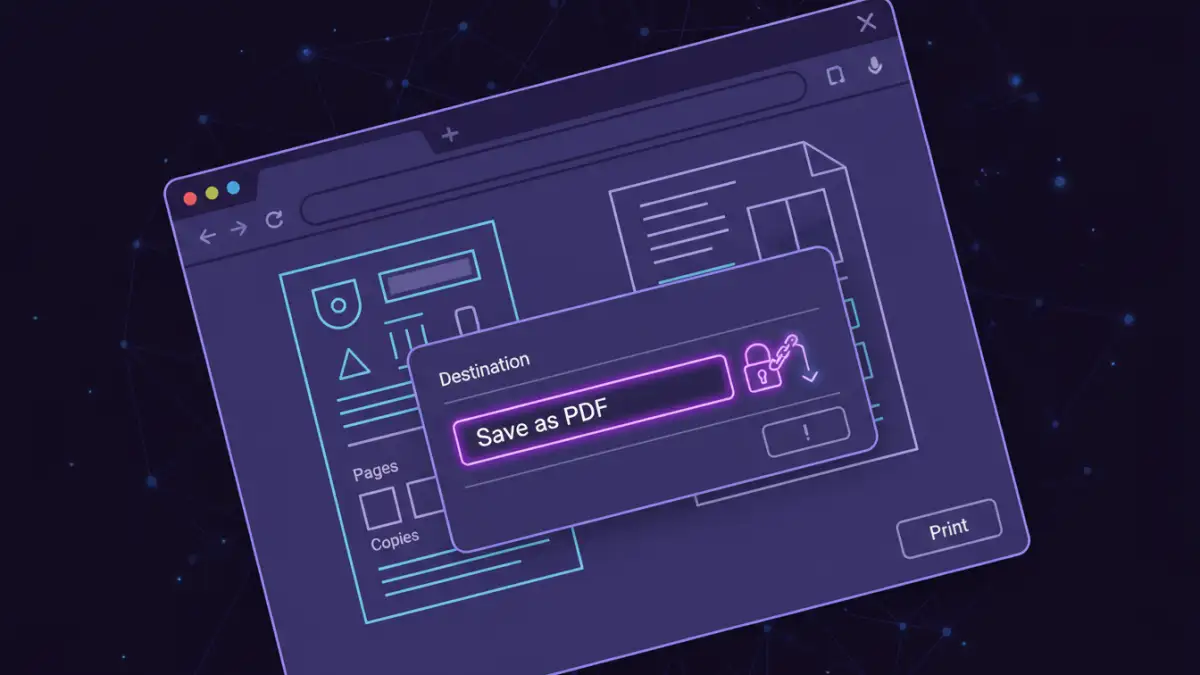
Surprisingly, one of the simplest methods proved effective for some of my less aggressively encrypted PDFs. If a PDF is protected only by an 'owner' password (restricting printing or editing, but allowing viewing), you can often 'print' it to a new, unsecured PDF using a web browser like Chrome or Edge. Open the PDF in the browser, go to the print option, and select 'Save as PDF' as your destination. This effectively creates a new, unprotected copy.
While this 'trick' doesn't bypass a 'user' password that prevents opening, it's a valuable tip for those who might have forgotten an owner password. For my user-password-protected files, this wasn't an option. I needed something more robust.
When Online Tools and Desktop Software Come In
For PDFs protected with a 'user' password, online tools or dedicated desktop software are often the next resort. I proceeded with extreme caution due to the sensitive nature of personal photos. Many online PDF unlockers can remove passwords, but uploading private data to third-party services always carries a risk. I opted for a highly reputable, well-reviewed desktop application that could handle password removal offline.
Using such software, I was eventually able to decrypt my photo collection, albeit after a significant investment of time and effort. This experience reinforced the need for a balanced approach to `photo file protection`, combining strong security with reliable access mechanisms.
Best Practices for Future Photo File Protection
Having navigated this near-disaster, I've refined my strategy for `photo collection security`. It's not just about encryption; it's about a holistic approach to data management and backup. No single solution is foolproof, but a layered defense significantly mitigates risks.
Robust Password Management
The core lesson was that strong, unique passwords are vital, but so is their secure management. I now use a dedicated, encrypted password manager for all critical credentials, including those for my digital archives. This ensures I can generate complex passwords without the burden of remembering each one, and they are stored securely and accessible only to me.
Multi-Layered Backup Strategies
Beyond passwords, redundancy is key. My photo collection is now backed up in multiple ways: on an external hard drive, in a secure cloud storage service with two-factor authentication, and on a separate, encrypted local drive. This multi-layered approach ensures that even if one copy is compromised or becomes inaccessible, I have other safe copies readily available. Encrypting the entire drive or cloud storage adds another layer of security, making `photo collection security` a comprehensive process.
Ensuring Photo Collection Security: Methods Compared
| Method | Pros | Cons | Best For |
|---|---|---|---|
| Browser Trick (Print to PDF) | Free, no software needed, quick for owner passwords | Limited to owner passwords, doesn't work for user passwords | Quick fixes for print-restricted PDFs |
| Online PDF Unlockers | Easy to use, fast processing, no software installation | Privacy concerns (uploading sensitive data), reliance on internet | Non-sensitive documents, quick one-off tasks |
| Desktop PDF Software | Powerful, handles all password types, works offline, more control | Often paid, requires installation, potential learning curve | Sensitive documents, frequent use, complex security needs |
| Password Managers | Secure storage, auto-generation, multi-platform sync | Requires initial setup, potential subscription costs, single point of failure if master password is lost | Long-term password security, managing many credentials |