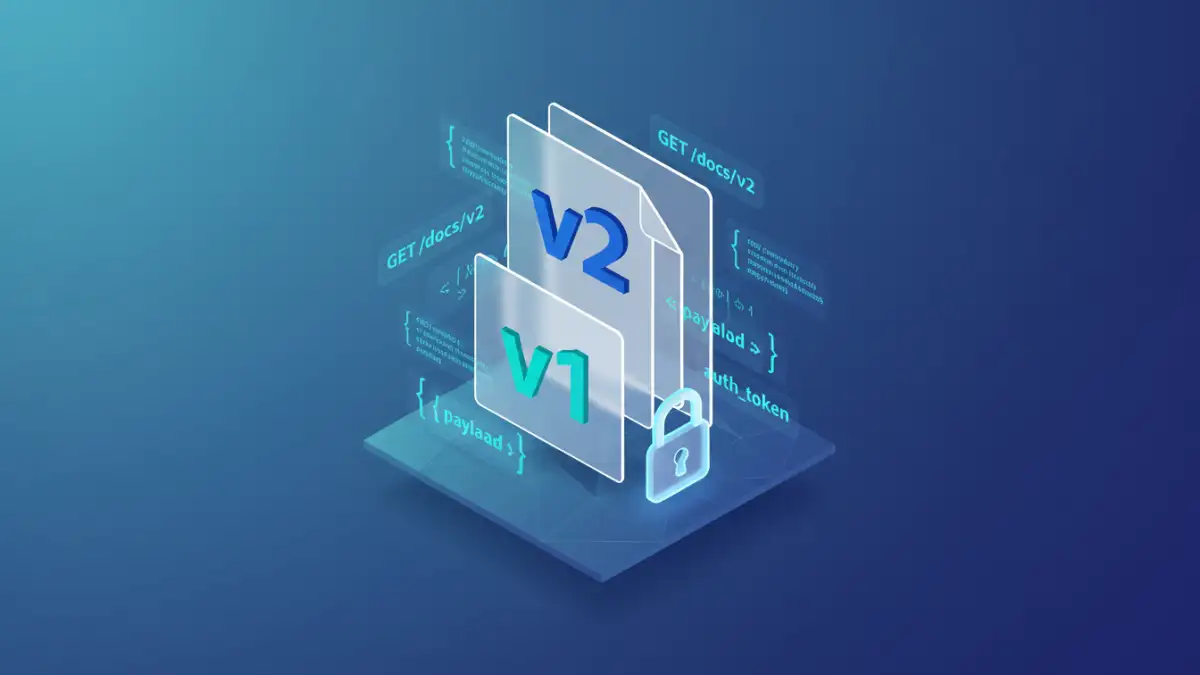
Ensuring that your API documentation remains accurate, accessible, and secure as your system evolves is a significant challenge. When dealing with APIs that handle sensitive documents, this challenge is amplified. Developers need to understand not just how to interact with your API, but also how to do so securely, and how changes over time affect those interactions. This requires a robust strategy for managing different versions of your documentation.
My experience has shown that a well-defined versioning strategy is not just good practice; it's critical for maintaining trust and usability, especially when security is paramount. Without it, teams can face confusion, implement outdated security protocols, or even introduce vulnerabilities.
Table of Contents
Understanding API Documentation Versioning
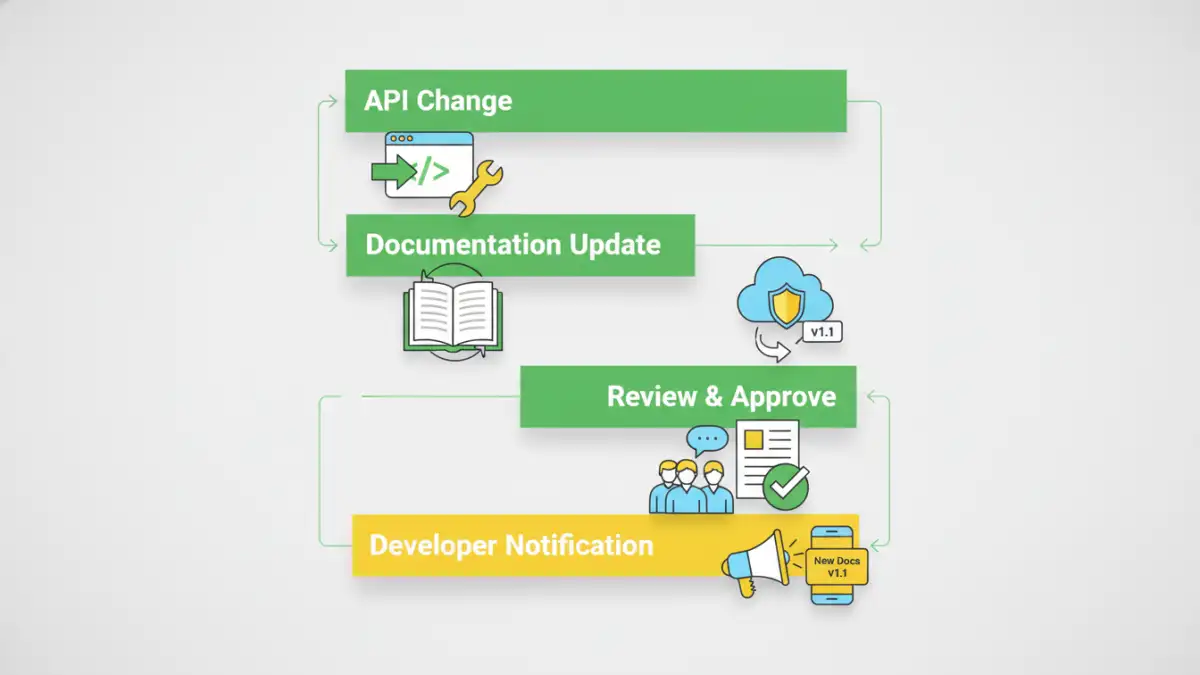
At its core, API documentation versioning is about managing changes to your API's interface and behavior over time. Every time you introduce a new feature, fix a bug, or make a breaking change, you're essentially creating a new version of your API. Your documentation must reflect these changes accurately.
This ensures that developers using your API can find the correct information for the specific version they are integrating with. It prevents them from using outdated endpoints, parameters, or security measures that might no longer be supported or, worse, might be insecure.
Key Benefits of Versioning
Implementing a clear versioning strategy offers several key benefits. It provides stability for existing users while allowing for innovation and improvement for new ones. This dual benefit is crucial for fostering a healthy developer ecosystem around your API.
Common Versioning Approaches

There are several established ways to implement versioning for your API documentation. Each has its own set of advantages and disadvantages, and the best choice often depends on your specific API's complexity and user base.
URI Versioning
One of the most common methods is to include the version number directly in the API's Uniform Resource Identifier (URI). For example, you might have endpoints like /v1/documents and /v2/documents. This makes the version explicit and easy for developers to identify.
Header Versioning
Another approach is to use HTTP headers to specify the API version. This can be done using custom headers like X-API-Version: 2 or by leveraging the Accept header with custom media types, such as Accept: application/vnd.myapp.v2+json. This keeps the URIs cleaner but might be less immediately obvious to developers.
Query Parameter Versioning
You can also specify the version as a query parameter in the URL, like /documents?version=2. While simple to implement, this method is generally less favored for production APIs as it can clutter URLs and is less semantically clear than URI or header versioning.
Specifics for Secure Document APIs
When your API deals with sensitive documents, versioning takes on an even greater importance. Security protocols, access control mechanisms, and data handling procedures are often version-specific. A mismatch here can lead to data breaches or compliance failures.
For instance, if version 1 of your API used a less secure authentication method for document uploads, and you've since moved to OAuth 2.0 in version 2, developers must be guided to the correct documentation. This is where secure document api documentation versioning becomes critical – ensuring that developers always refer to the most up-to-date and secure implementation details.
Handling Security Updates
When security vulnerabilities are discovered or new, stronger security standards emerge, you'll need to update your API and its documentation. Versioning allows you to roll out these changes incrementally. You can deprecate older, less secure versions while encouraging migration to newer, more secure ones. Clear communication and detailed documentation for the migration process are key.
Managing Updates and Deprecations
A key part of any versioning strategy is how you manage updates and, critically, how you handle deprecated versions. Simply releasing new versions isn't enough; you need a clear lifecycle for each version.
Deprecation Policies
Establish a clear deprecation policy. This involves announcing upcoming deprecations well in advance, providing migration guides, and setting a sunset date for older versions. This gives developers ample time to adapt their integrations, minimizing disruption.
Communication Channels
Effective communication is vital. Use channels like release notes, developer forums, email lists, and prominent banners on your documentation portal to inform users about new versions, upcoming deprecations, and important security updates. Transparency builds trust.
Best Practices for Documentation Versioning
To effectively manage API documentation, especially for secure document APIs, several best practices should be followed. These principles ensure that your documentation remains a reliable resource for your developers.
Consistency is Key
Maintain consistency in your versioning scheme across all your API endpoints and documentation. Whether you choose URI, header, or another method, stick with it. Inconsistent versioning is a surefire way to confuse developers.
Clear Changelogs
Provide detailed changelogs for each version. These should clearly outline what has changed, including new features, bug fixes, and any changes related to security or data handling. This helps developers understand the impact of updating.
Accessible Version History
Make it easy for developers to access documentation for all relevant past versions. Often, developers cannot immediately update their integrations and need to refer to older documentation. Ensure these are archived and accessible.
Automate Where Possible
Leverage tools to automate the documentation generation and versioning process. This reduces the risk of human error and ensures that documentation is generated directly from your codebase or API specifications, leading to greater accuracy.
Comparison Table: Versioning Strategies for API Documentation
| Strategy | Pros | Cons | Best For |
|---|---|---|---|
| URI Versioning | Explicit, easy to identify in URLs | Can clutter URIs, less flexible for complex routing | Simple APIs, clear version separation needed |
| Header Versioning | Keeps URIs clean, more flexible routing | Less obvious to developers, requires understanding HTTP headers | RESTful APIs, microservices, when URI structure is important |
| Query Parameter Versioning | Simple to implement, easy for testing | Can clutter URLs, less semantic, not recommended for production | Internal testing, quick prototypes |
| Content Negotiation (Accept Header) | Semantic, follows HTTP standards | Can be complex to implement and understand | APIs aiming for strict REST adherence, complex data formats |