
The need to share sensitive information reliably and securely has never been more critical for businesses of all sizes. From legal contracts and financial reports to intellectual property and client data, the integrity and confidentiality of shared documents are paramount. This has fueled significant growth and innovation within the secure document sharing platform market.
Understanding the dynamics of this market is essential for organizations looking to implement robust data protection solutions. Factors like evolving cyber threats, remote workforces, and stringent regulatory compliance are shaping how businesses approach file sharing security.
Table of Contents
Market Overview and Growth
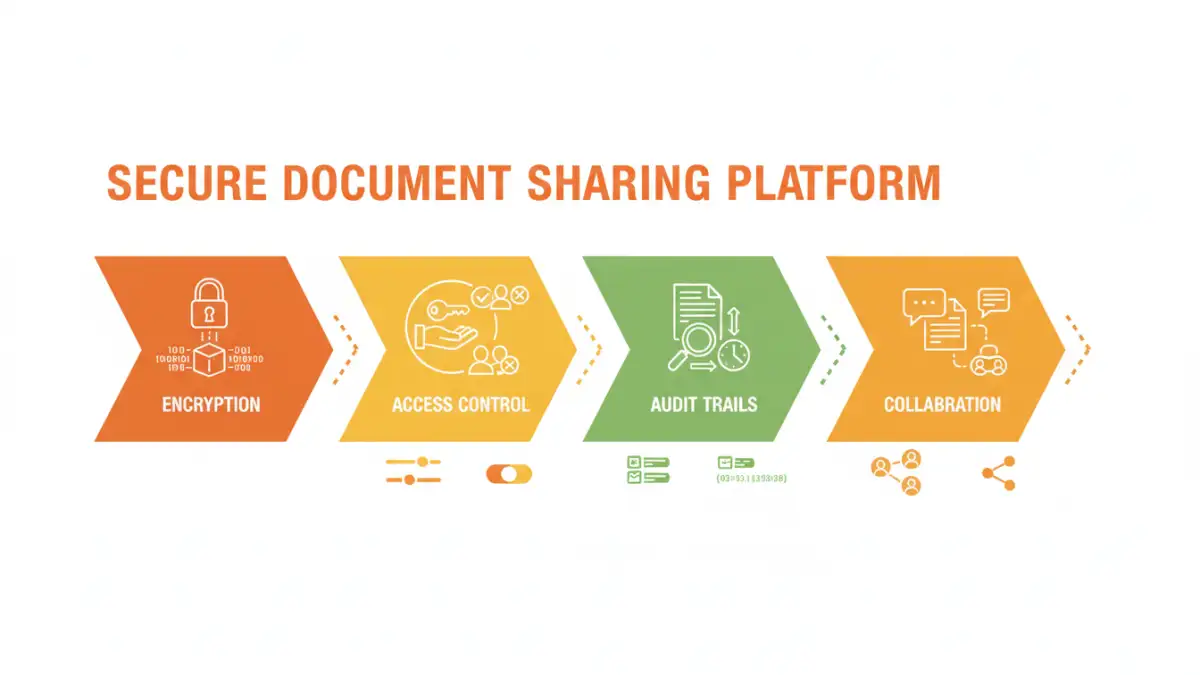
The global secure document sharing platform market is experiencing robust expansion. Driven by the increasing volume of sensitive data being generated and the persistent threat of cyberattacks, organizations are actively seeking advanced solutions. These platforms offer features like end-to-end encryption, access controls, audit trails, and granular permissions to ensure data remains protected throughout its lifecycle.
This growing demand translates into significant market value and projected compound annual growth rates. Investments in cloud-based solutions and the integration of AI for enhanced security features are further accelerating this trend. The emphasis is shifting from basic file transfer to comprehensive data governance and collaboration tools.
Key Market Drivers

Several factors are propelling the growth of the secure document sharing market. The escalating sophistication of cyber threats, including ransomware and data breaches, necessitates stronger protection mechanisms than traditional methods can offer. Compliance with regulations like GDPR, HIPAA, and CCPA also plays a crucial role, as organizations must demonstrate robust data handling practices.
Furthermore, the widespread adoption of remote and hybrid work models has increased reliance on digital collaboration tools. Businesses need platforms that enable seamless yet secure sharing of documents among distributed teams. The increasing value of data as a business asset also drives investment in its protection.
Evolving Cyber Threats
As cybercriminals become more adept, traditional security measures are often insufficient. Advanced persistent threats (APTs) and sophisticated phishing attacks target document repositories, making robust, multi-layered security essential. Platforms offering real-time threat detection and prevention are in high demand.
Regulatory Compliance Demands
Governments and industry bodies worldwide are imposing stricter data privacy laws. Failure to comply can result in hefty fines and severe reputational damage. Secure document sharing platforms help organizations meet these compliance obligations by providing auditable logs and ensuring data is handled according to legal requirements.
Market Segmentation
The secure document sharing market can be segmented in various ways, offering deeper insights into specific areas of growth and demand. Segmentation by deployment model, such as cloud, on-premises, and hybrid solutions, highlights the ongoing shift towards cloud-based services due to their scalability and accessibility.
Segmentation by organization size (small and medium-sized businesses vs. large enterprises) reveals different adoption patterns and feature requirements. While large enterprises often require comprehensive, enterprise-grade solutions, SMBs may seek more cost-effective and user-friendly options. Segmentation by industry, such as healthcare, finance, and legal, also shows varying needs based on regulatory landscapes and data sensitivity.
By Deployment Model
Cloud-based solutions dominate the market, offering flexibility, cost-effectiveness, and ease of management. However, organizations with highly sensitive data or strict on-premises policies may opt for on-premises or hybrid deployments for greater control.
By End-User Industry
Industries like healthcare, finance, and legal are primary adopters due to the highly sensitive nature of their data and strict regulatory requirements. Government agencies also represent a significant segment, prioritizing security and compliance above all else.
Competitive Landscape
The competitive landscape for secure document sharing platforms is dynamic and increasingly crowded. Key players range from established enterprise software providers to specialized cloud security companies. Innovation is driven by features such as advanced analytics, AI-powered threat detection, and seamless integration with existing business workflows.
Mergers, acquisitions, and strategic partnerships are common as companies seek to expand their offerings and market reach. Vendors are investing heavily in research and development to stay ahead of emerging threats and evolving user demands for intuitive, secure collaboration tools. The focus is on providing end-to-end security from document creation to sharing and archival.
Future Trends and Outlook
Looking ahead, the secure document sharing market is poised for continued growth and evolution. The integration of blockchain technology for enhanced data integrity and traceability is an emerging trend. Furthermore, the adoption of zero-trust security models will become more prevalent, ensuring that no user or device is implicitly trusted, regardless of location.
AI and machine learning will play an even larger role in automating security tasks, identifying anomalous behavior, and providing proactive threat intelligence. The demand for platforms that offer a unified approach to data security, collaboration, and compliance will continue to rise, making the secure document sharing space a critical component of modern business infrastructure.
Market Insights Comparison Table
| Feature Category | Key Aspects | Impact on Market | Example Technologies |
|---|---|---|---|
| Security Features | Encryption (in transit & at rest), Access Control, Audit Trails, Data Loss Prevention (DLP) | Core differentiator, drives adoption for compliance and risk mitigation | AES-256, TLS/SSL, Role-Based Access Control (RBAC), SSO |
| Collaboration Tools | Real-time co-editing, Version Control, Workflow Automation, Secure Messaging | Enhances productivity for remote teams, essential for modern workflows | Microsoft 365 integration, Google Workspace integration, built-in editors |
| Deployment Models | Cloud (SaaS), On-Premises, Hybrid | Cloud leads due to scalability and cost, but hybrid/on-premise cater to specific needs | AWS, Azure, Google Cloud, dedicated servers |
| User Experience (UX) | Intuitive interface, Mobile accessibility, Ease of integration | Crucial for user adoption and productivity, reduces training overhead | Responsive design, mobile apps, API integrations |
| Compliance & Governance | Regulatory adherence (GDPR, HIPAA, etc.), Data residency controls, eDiscovery | Mandatory for regulated industries, builds trust and reduces legal risk | Data localization features, compliance certifications, audit logging |