
Working with sensitive information often means dealing with older file formats. Whether it's a crucial business contract from years ago, personal archives, or research data, these legacy documents may not have the built-in security features of modern files. Ensuring these older files are protected from unauthorized access is paramount. Fortunately, there are straightforward ways to add a layer of security, even for formats that might seem outdated.
My experience has shown that clients and colleagues often underestimate the need to secure older files. They might assume older formats are less vulnerable, or perhaps they're unsure how to add protection without specialized software. The good news is that many methods exist, ranging from simple password prompts to more robust encryption techniques, making it feasible to password protect older document types effectively.
Table of Contents
Understanding the Need for Protection
In today's digital landscape, data breaches and unauthorized access are significant concerns. Older document formats, while perhaps less common, can still contain highly sensitive information. Think about financial records, intellectual property, personal correspondence, or legal documents. If these files fall into the wrong hands, the consequences could be severe.
Why Older Formats Need Extra Care
Many older formats, like .doc, .xls, or even early .pdf versions, might lack native, strong encryption capabilities. Furthermore, the software designed to open them might be less secure or no longer supported, leaving them vulnerable. Implementing a password protection strategy is essential to safeguard the integrity and confidentiality of the data contained within these legacy files.
Practical Methods to Secure Old Files
The approach you take to secure old files will depend on the file type, your technical comfort level, and the sensitivity of the data. Fortunately, several accessible methods can help you password protect older document formats, ensuring they remain private.
Choosing the Right Approach
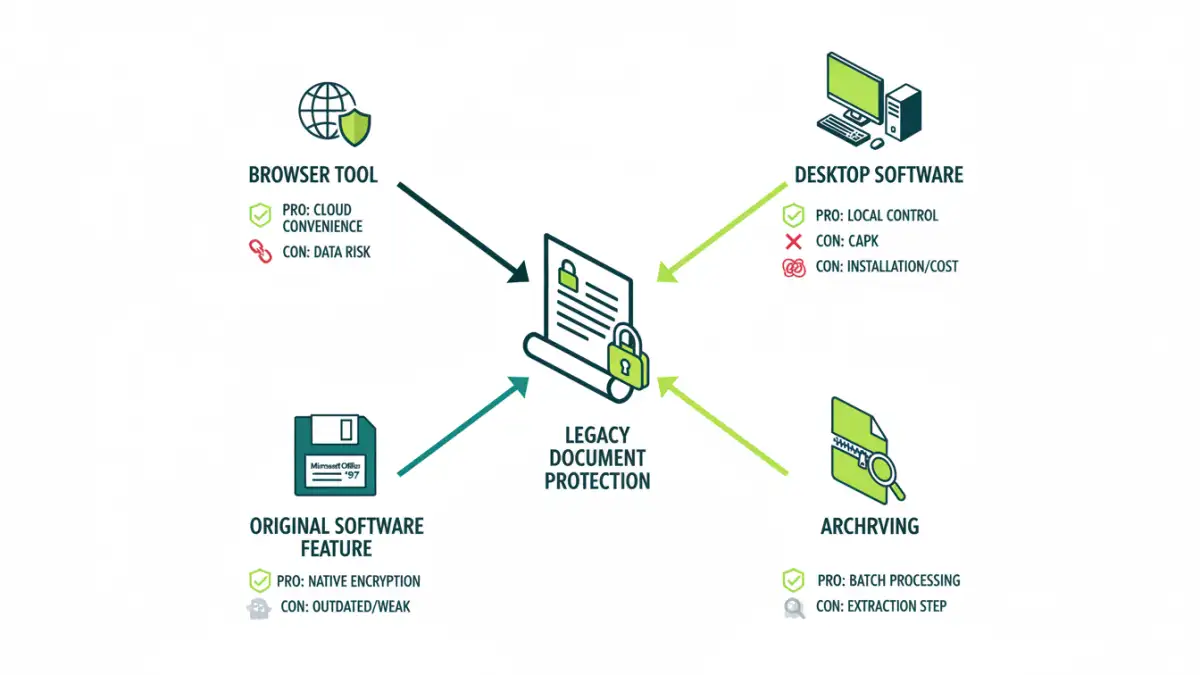
The goal is always to create a barrier that prevents casual or unauthorized viewing. This could involve using built-in features of older software versions, utilizing online conversion and protection tools, or employing dedicated desktop applications. Each has its advantages and potential drawbacks.
Using Browser-Based Tools
One of the most accessible ways to add security is through online tools. Many websites offer services to encrypt documents, often by converting them to a more secure format or by adding a password layer. This is particularly useful if you don't have the original software or if it lacks a password feature.
The Online Encryption Process
Typically, you upload your document, choose a password, and the online service processes it. You then download the newly protected file. For example, you might upload an old Word document, have it converted to a password-protected PDF, and then download that. This method is convenient for one-off tasks and requires no software installation. However, it's crucial to use reputable online services to avoid potential privacy risks, as you are uploading your files to a third-party server.
Leveraging Desktop Software
For more robust security or frequent use, dedicated desktop software is often the best route. Many applications are designed specifically for document management and security, allowing you to encrypt files or add password protection to various formats. These tools often provide stronger encryption algorithms and more granular control over security settings.
Software for Comprehensive Protection
Some older versions of Microsoft Office might have had basic password protection features for .doc or .xls files. If those are insufficient, you can use tools like Adobe Acrobat for PDFs, or general file encryption software that can lock down any file type. These desktop solutions typically offer better security, especially for highly sensitive data, as the files are processed locally on your machine, mitigating the risks associated with online uploads.
Best Practices for Legacy File Security
Beyond simply adding a password, several best practices can enhance the security of your older documents. A strong password is the first line of defense, but it's not the only one. Regular backups of your secured files are also essential, ensuring you don't lose access if something goes wrong.
Enhancing Security and Access
When selecting a password, opt for complexity: a mix of uppercase and lowercase letters, numbers, and symbols. Avoid easily guessable information. Consider using a password manager to generate and store strong, unique passwords for each document. Regularly review your security measures and update them as needed, especially if the software or tools you rely on become outdated or unsupported.
Comparison Table: Methods to Secure Old Files
| Method | Pros | Cons | Best For |
|---|---|---|---|
| Original Software Feature | Built-in, often free | May be weak, not always available | Simple password protection on supported formats |
| Online Encryption Tools | Convenient, no installation | Privacy concerns, potential limitations | Quick, one-time protection of less sensitive files |
| Desktop Encryption Software | Robust security, local processing, advanced features | Can be paid, requires installation | High-security needs, frequent protection of sensitive data |
| File Archiving with Password | Bundles multiple files, strong encryption options | Requires archiving software, can be slower | Securing collections of legacy files |