
With increasing cyber threats, ensuring the safety of our digital information has never been more critical. Whether you're sharing confidential reports with a client or exchanging sensitive project files with your team, the method you choose for secure document sharing can significantly impact data integrity and privacy. I've seen firsthand how easily data breaches can occur when proper protocols aren't followed, highlighting the constant tension between convenience and robust security.
Table of Contents
Understanding the Secure Document Sharing Landscape
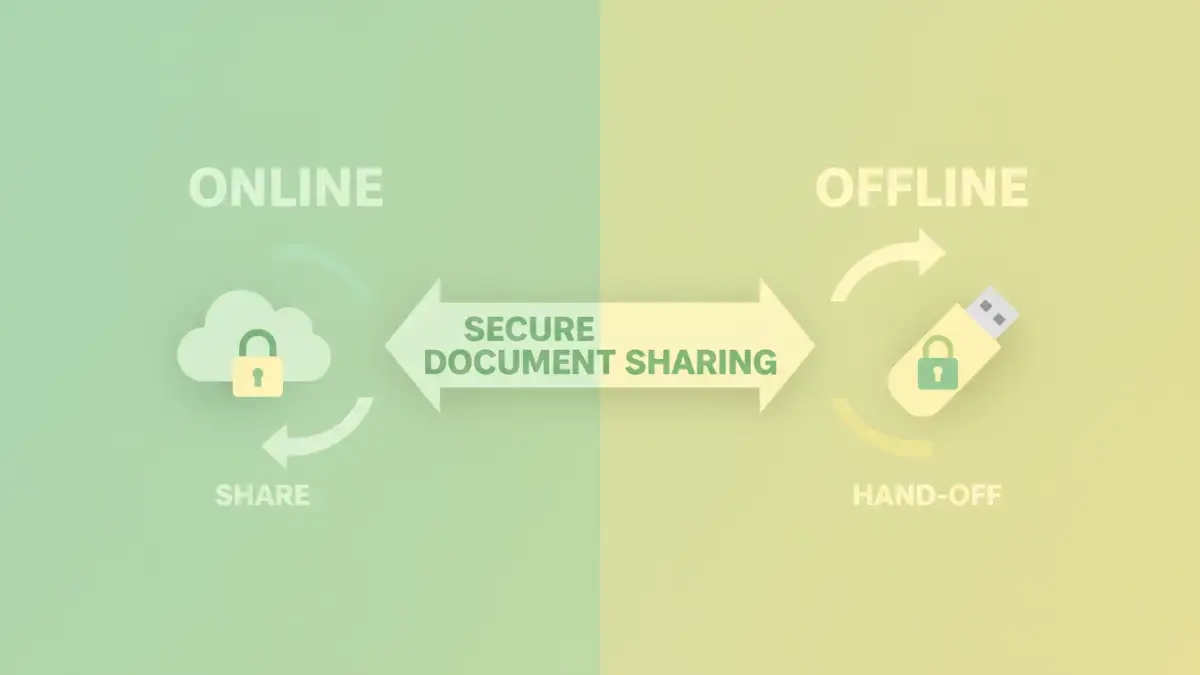
The need for secure document sharing stems from the sensitive nature of the information we handle daily. This isn't just about protecting against hackers; it's also about preventing accidental disclosures, ensuring regulatory compliance, and maintaining trust with clients and partners. My work over the past decade has consistently reinforced that understanding the threat model is the first step towards effective protection.
Why Document Security Matters
Every piece of information, from financial records to proprietary code, carries a certain value. Unauthorized access or loss can lead to financial penalties, reputational damage, and intellectual property theft. Therefore, implementing robust measures for secure file exchange isn't merely a technical task; it's a fundamental business imperative.
Online Platforms for Secure Document Sharing
Modern online platforms have revolutionized how we collaborate and share documents. These solutions often provide a rich set of features designed to facilitate document collaboration security, making them a popular choice for many organizations. However, their reliance on internet connectivity and third-party infrastructure introduces unique security considerations.
Features and Benefits of Online Platforms
Cloud-based platforms typically offer end-to-end encryption, multi-factor authentication, granular access controls, and audit trails. Services like Microsoft SharePoint, Google Drive (with enterprise features), and dedicated secure file sharing services allow for real-time collaboration and version control, greatly enhancing productivity. From a software engineering perspective, the APIs and integrations these platforms offer are incredibly powerful for automating workflows and ensuring seamless data flow.
Potential Risks and Limitations
Despite their advantages, online platforms come with inherent risks. Data sovereignty, the potential for insider threats at the service provider, and susceptibility to cyberattacks like phishing or DDoS are real concerns. Furthermore, relying on an internet connection means accessibility can be an issue in certain environments, and vendor lock-in can complicate data migration.
Offline Methods for Secure Document Sharing
Before the widespread adoption of cloud computing, offline methods were the standard for secure file transfer. While they might seem less convenient today, they still hold significant value, especially when dealing with extremely sensitive data or operating in environments with limited internet access. I've often advised clients to consider these methods for their most critical, 'air-gapped' data.
Traditional Approaches and Their Advantages
Offline methods include encrypted USB drives, external hard drives, or even direct physical transfer of devices. The primary advantage here is that the data never traverses the public internet, significantly reducing exposure to online threats. You maintain complete control over the physical medium and its encryption, offering a high degree of privacy for cloud vs local sharing scenarios.
Challenges and Drawbacks
The obvious drawback is convenience. Physical transfer is slow, prone to loss or damage of the storage device, and lacks the collaborative features of online platforms. Managing access controls and versioning across multiple physical copies can become a nightmare. My own experience has shown that ensuring consistent encryption standards and secure handling procedures for physical media is a constant operational challenge.
Security Considerations and Best Practices
Regardless of whether you choose online or offline methods, certain security principles remain paramount. Implementing these practices is crucial for achieving true secure document sharing. It’s about creating a layered defense, where each component reinforces the others.
Encryption and Access Control
Always use strong encryption for data both in transit and at rest. For online platforms, ensure end-to-end encryption is enabled. For offline methods, use full-disk encryption or file-level encryption on your storage devices. Implement the principle of least privilege, granting access only to those who absolutely need it, and for the shortest possible duration. Regular reviews of access permissions are non-negotiable.
Audit Trails and Employee Training
Maintain detailed audit trails of who accessed what, when, and from where. This is critical for forensic analysis in case of a breach. Equally important is comprehensive employee training on security protocols, phishing awareness, and proper handling of sensitive information. A strong security culture is often the best defense against human error.
Making the Right Choice for Your Needs
The decision between online platforms and offline methods isn't always clear-cut; often, a hybrid approach works best. For routine document collaboration security, online platforms offer unparalleled convenience and feature sets. However, for extremely sensitive data that requires maximum isolation, or in situations where internet connectivity is unreliable, offline methods provide a crucial layer of control.
Consider the sensitivity of the data, regulatory requirements, the need for collaboration, and your organization's risk tolerance. A robust strategy incorporates the strengths of both, ensuring that your approach to secure document sharing is both practical and resilient against evolving threats. Ultimately, the goal is to protect your information effectively without unduly hindering productivity.
Comparison Table
| Feature | Online Platforms | Offline Methods | Best For |
|---|---|---|---|
| Convenience | High (anywhere, anytime access) | Low (physical transport required) | General collaboration |
| Collaboration | Excellent (real-time, versioning) | Poor (manual synchronization) | Team projects |
| Security Control | Shared responsibility (vendor + user) | Full user control (physical & encryption) | Highly sensitive, air-gapped data |
| Cost | Subscription-based, scalable | One-time hardware cost, operational overhead | Varies by scale & needs |
| Threat Vectors | Cyberattacks, insider threats (vendor) | Physical loss/theft, human error | Specific risk profiles |
| Accessibility | Internet dependent | Independent of internet | Remote work vs. isolated environments |